Bitcoin

Bitcoin Unveiled: A Deep Dive into the Currency of the Digital Age

Introduction: The Dawn of a New Monetary Era
When Bitcoin emerged quietly in 2009, few could have predicted the storm it would unleash on global finance. Conceived by the elusive Satoshi Nakamoto, Bitcoin wasn’t just a digital currency; it was a philosophical statement. It challenged the long-held dominion of central banks, redefined the notion of trust in transactions, and offered an audacious vision: money governed by mathematics, not by governments. Today, more than a decade later, Bitcoin remains the standard-bearer of the cryptocurrency revolution, polarising opinion, inspiring innovation, and forcing a fundamental rethink of what money can be.

A Brief History: From White Paper to Wall Street
In October 2008, Satoshi Nakamoto released a nine-page white paper titled Bitcoin: A Peer-to-Peer Electronic Cash System. At its heart was the idea that digital transactions could occur directly between individuals without a trusted intermediary like a bank. This was made possible by blockchain technology—a transparent, tamper-proof ledger maintained by a network of computers across the world.

The first Bitcoin transaction took place in January 2009 when Nakamoto mined the genesis block, embedding a message referencing the bank bailouts of the financial crisis: “The Times 03/Jan/2009 Chancellor on brink of second bailout for banks.” This subtle protest encapsulated Bitcoin’s spirit—born in defiance of reckless monetary policy and institutional failure.

How Bitcoin Works: Under the Hood
To the uninitiated, Bitcoin can seem arcane. Yet its mechanics rest on a few clear pillars:

  • Blockchain: The blockchain is Bitcoin’s spine—a public ledger recording every transaction ever made. Each “block” contains a set of transactions, cryptographically linked to the previous one, creating an unbroken chain of data.

  • Mining: Transactions are verified and added to the blockchain by miners—participants who contribute computing power to solve complex mathematical puzzles. This process secures the network and issues new Bitcoins as rewards, creating an incentive to maintain the system.

  • Limited Supply: Unlike fiat currencies, Bitcoin’s supply is capped at 21 million coins. This hard limit, coded into its protocol, stands in stark contrast to the money-printing capabilities of modern central banks. Many argue this built-in scarcity gives Bitcoin its “digital gold” status.

Bitcoin’s Evolution: Currency, Commodity, or Both?
Early enthusiasts envisioned Bitcoin as an everyday currency—a digital cash for buying coffee or groceries. However, due to its price volatility and transaction speed limitations, it has evolved more as a store of value than a daily payment method.

Many investors now view Bitcoin as an alternative asset class—a hedge against inflation and a counterweight to traditional equities. In recent years, large institutions, hedge funds, and even public companies have added Bitcoin to their balance sheets, lending it legitimacy once unimaginable.

Why Bitcoin Matters: More than Price Charts
The fascination with Bitcoin often fixates on its rollercoaster prices—jaw-dropping highs, gut-wrenching lows. But the true significance of Bitcoin runs deeper:

  • Decentralisation: No single entity controls Bitcoin. This makes it resistant to censorship and manipulation—a sharp contrast to conventional monetary systems.

  • Financial Inclusion: In regions where banking infrastructure is limited, Bitcoin can offer a means of saving and transferring value without reliance on intermediaries.

  • Privacy and Sovereignty: While not fully anonymous, Bitcoin transactions grant individuals more privacy than traditional banking, empowering users with greater financial self-determination.

Challenges on the Road Ahead
Of course, Bitcoin is no utopia. Its journey is fraught with hurdles that provoke valid debate among economists, technologists, and regulators alike.

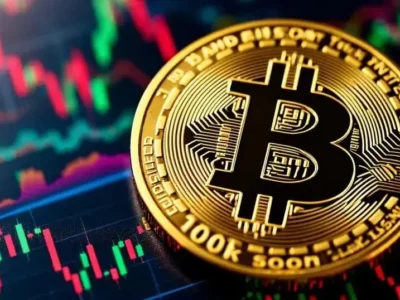
  • Volatility: Bitcoin’s value can swing dramatically within hours. While this volatility attracts traders, it hinders its adoption as a stable medium of exchange.

  • Regulatory Uncertainty: Governments worldwide continue to wrestle with how to regulate Bitcoin. Some have embraced it; others have banned it outright, citing risks of money laundering and tax evasion.

  • Environmental Concerns: Bitcoin mining consumes massive amounts of energy, leading to criticism about its carbon footprint. The industry has responded with initiatives promoting renewable-powered mining, but the debate remains contentious.

Bitcoin and the Broader Crypto Landscape
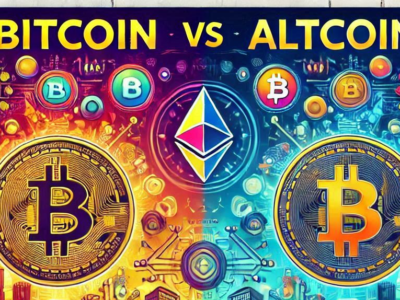
Bitcoin laid the foundation for thousands of other cryptocurrencies. While some mimic its model, others have branched out with new consensus mechanisms and applications. Ethereum, for instance, introduced smart contracts, enabling decentralised applications beyond mere currency.

Yet despite fierce competition and waves of new tokens, Bitcoin retains its primacy. Its brand recognition, first-mover advantage, and robust security continue to anchor it as the flagship of the crypto world.

Future Prospects: What Lies Ahead for Bitcoin?
Predicting Bitcoin’s future is as volatile as its price. Some see it becoming a widely accepted digital reserve asset, coexisting with fiat currencies as a hedge against inflation and systemic risk. Others believe it will fade as governments launch central bank digital currencies (CBDCs) and better technologies emerge.

Yet Bitcoin’s durability thus far suggests a certain resilience. Each cycle of boom and bust has brought more users, more sophisticated infrastructure, and broader institutional adoption. Innovations like the Lightning Network, which aims to make transactions faster and cheaper, also hint at Bitcoin’s capacity to evolve.

Final Thoughts: Bitcoin as an Idea
Beyond the headlines, Bitcoin’s true legacy may lie not in its market cap but in its ideas. It asks us to question deeply entrenched assumptions about money, trust, and authority. It empowers individuals to become their own banks and challenges the state’s monopoly over monetary policy.

For its believers, Bitcoin is more than a digital coin—it is a peaceful protest wrapped in code, a bulwark against inflation, and a symbol of technological sovereignty. For its critics, it remains an experiment teetering on the edge of speculative excess.

Either way, Bitcoin has forced a conversation that can no longer be ignored. In a world increasingly shaped by technology and decentralisation, its spirit will likely echo far beyond the coins themselves, shaping how we think about value, freedom, and the future of money.

In the end, whether Bitcoin rises, falls, or transforms into something entirely new, it has already made one thing clear: the story of money is far from over—and Bitcoin, in all its audacious complexity, is writing a thrilling new chapter.

What is your reaction?

Excited
0
Happy
0
In Love
0
Not Sure
0
Silly
0

You may also like

More in:Bitcoin